
 EN
EN
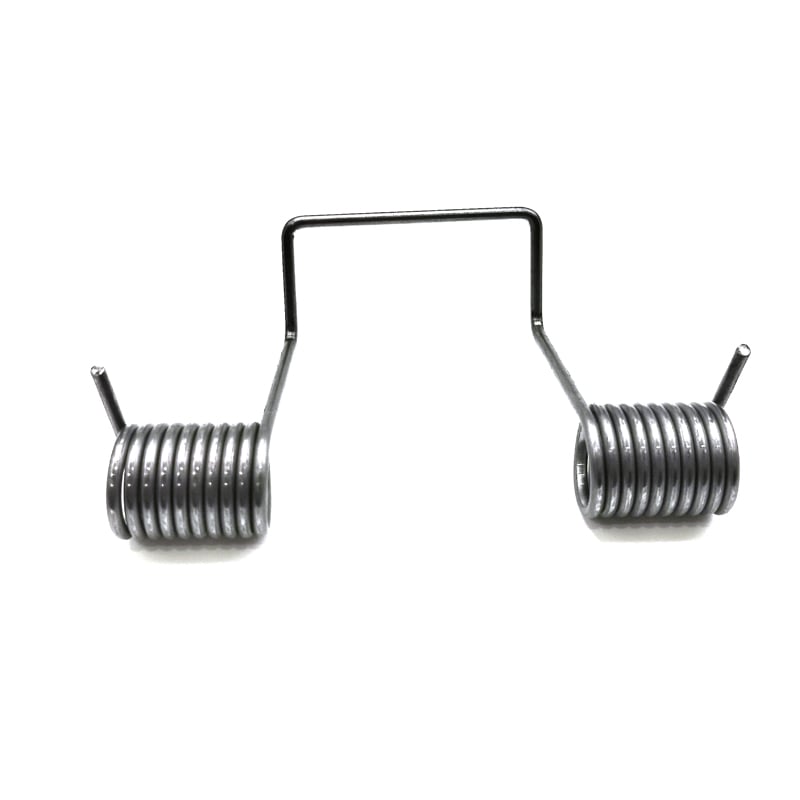
The lowly battery contact spring is a mission critical element in the field of electronics and electrical devices. It is the silent protector of power, and it is responsible to provide a steady and constant connection of electric power. The most frequent difficulty however, which many users and manufacturers finally face is the fact that these springs tend to lose their clamping force overtime which is a common problem in many of these springs. This is the phenomenon that we are fighting at Xiamen Hongsheng Hardware Spring Co., Ltd. The fundamental causes of it are the very first step of offering credible and sustainable solutions.
The Inevitable Challenge of Stress Relaxation
The primary technical culprit behind spring relaxation is a process known as stress relaxation. It is a slow and irreversible loss of stress in a material as it is maintained in a constant stress, like a contact spring being depressed in a battery compartment over months or years. Imagine that it is the microscopic structure of the material gradually adapting to the constant strain and giving in. Although the rate and extent are wildly different, even the finest metals are liable to this law of physics. In the case of a spring manufacturer, the war is not to exclude stress relaxation, but rather to choose the materials and processes that would reduce its impact to an insignificant quantity during the intended lifetime of the product. We are interested in using alloys and thermal treatments that naturally resist this creep which will make the spring stay springy much longer.
The Impact of Thermal and Environmental Factors
Heat is an intense stimulator of the relaxation. Battery compartments are subject to high temperature in many devices caused by either internal or external circuitry. This heat energy makes atoms of the spring material more energetic, and they can easily restructure and permanently deform. Moreover, the spring material can be lost physically due to environmental forces such as corrosion. The oxidation on the surface will wear through the contact points with the slightest vibration of the device or insertion process and simply alter the geometry of the spring and decrease its force. In Hongsheng, we do not only think of room-temperature performance in designing. We take into consideration the thermal realities of your application and where required we suggest or use coatings that guard the spring against corrosive materials, so that its mechanical integrity is maintained.
The Critical Role of Design and Manufacturing Precision
In many cases, premature relaxation may be corrected to the original design or production defects. A spring that is working near the elastic limit of its material is inherently a stressed spring and it will relax quicker. Equally, inaccurate production may also result in microscopic deficiencies or even uneven material characteristics which over the years may serve as areas of failure. Xiamen Hongsheng Hardware Spring Co., Ltd. is facing this by precision engineering. We use the powerful simulation and testing to produce springs that will be used within a safe and optimum load range. Our production systems, coiling to heat treatment are well regulated in order to yield springs that are of a very high consistency and natural durability. This is what makes the difference between a spring that only works and a spring that lasts: this accuracy in the drawing board to the finished product.
Choosing the Right Partner for Longevity
As it turns out, the reduction of contact spring relaxation is a complex task that entails experience in the fields of metallurgy, physics, design and high precision production. This is not something that can be corrected by simply switching to a heavier piece of the wire. It requires a partner that recognizes the interaction of these variables and is proactively designing around them. At the Xiamen Hongsheng Hardware Spring Co., Ltd. we consider each spring as a promise of reliability. We offer contact springs that can offer sustained performance by digging deep into the science of relaxation and introduce it to serious manufacturing discipline so that our clients can be assured of their devices to deliver power in a reliable manner both today and well into the future.