
 EN
EN
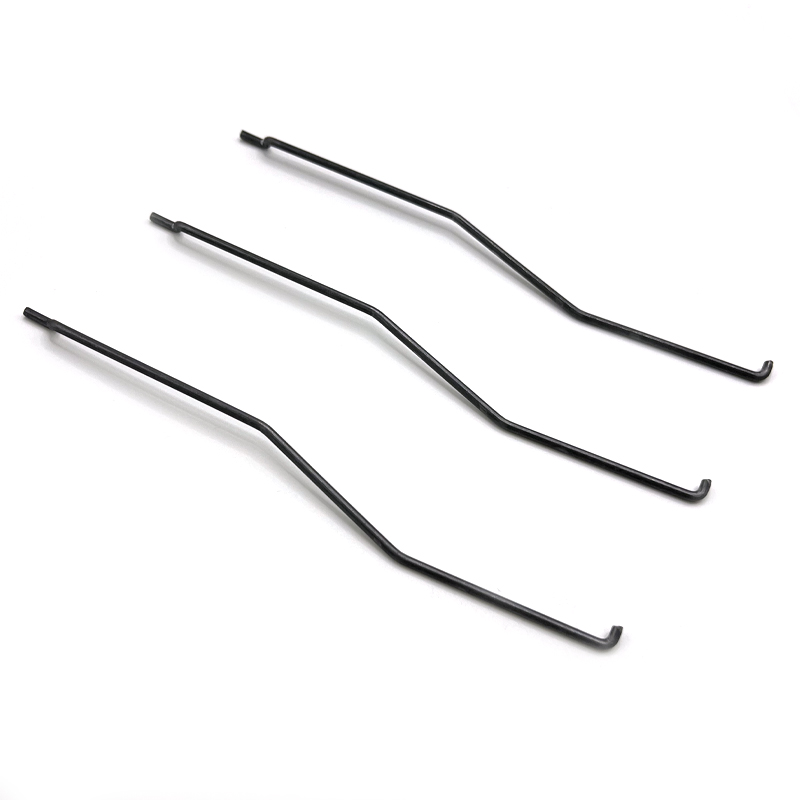
Within the complex manufacturing and industrial design sphere, there are an innumerable number of pieces that constitute the foundation of the products and machines that we use every day. Wire forming is one of the most diverse and fundamental manufacturing processes of these parts. This is the main method of our expertise at Xiamen Hongsheng Hardware Spring Co., Ltd. where we have been able to produce very specific, long-lasting and custom metal products to a very wide range of industries. However, what is wire forming and why is it so important? We can examine its definition, common applications, its fundamentals and the methods that guarantee quality and accuracy.
Understanding Wire Forming
Wire forming is a metalworking process that is used to form metal wire (usually steel, stainless steel, aluminum or other alloys) into a desired two-dimensional or three-dimensional shape. Controlled bending, cutting and shaping are done to do this. Wire forming is a complex-shaped activity as opposed to simple cutting, where the geometry of the wire is manipulated to produce complex forms, loops, curves, and straight cuts with high accuracy. This is aimed at providing a component that is of precise functionality in terms of strength, flexibility, and form. We start with these specifications at Hongsheng Hardware to determine the right base material so that the end product will work well in its new environment be it at high tensile strength, corrosion resistance, or a certain conductive characteristic.
Principal Uses and Applications of Formed Wire Parts
The use of the custom wire forms is almost inexhaustible, extending to all the key domains of the contemporary industry. They can be used in automobiles in seating systems, engine parts, and complex harnesses. They have been used in the appliance industry in refrigerator racks, microwave oven hinges, and dishwasher baskets to allow them to be strong and easy to clean. Consumer electronics use very fine wires (connectors, shield, intra-support) that are very delicate and formed in a very precise way. Moreover, medical equipment industry requires preciseness and normally microscopic wire forms to be used in surgical tools, diagnostic equipment, and orthopedic implantation. Our engineers at Xiamen Hongsheng collaborate closely with customers in these different spheres of practice in order to turn an idea or an elaborate sketch into a completed component that either addresses a particular mechanical issue, adds functionality to a product or increases the speed of assembly.
The Wire Forming Process: Idea to part
Designing a wire form into a real component is a process that is very controlled in nature. It begins with the process of engineering and design validation where our team would assure the proposed shape can be manufactured and it would meet all the performance requirements. The metal wire having been chosen is then fed off a coil into a wire forming machine which is controlled by a computer. These machines bend the wire at specific points with a number of tools, dies and mandrels as the wire moves through the machine. Other operations such as cutting, coiling, piercing or welding can be done inline or as the secondary process to finish the component. During this phase, the accuracy is of the essence. Our high-end wire forming technology is CNC (Computer Numerical Control) and it has the ability to maintain great repeatability and tight tolerances making all the pieces in a production run exactly the same as the previous one.
Important Methods of Accuracy and Quality
Learning how to work with wire involves more than having strong equipment; one should also have a great insight into the nature of metals and how to work towards the correct outcome with precision engineering. The strategic planning of the bend sequence is one very important method that will avoid the deformation of the wire and the final shape is obtained without any stress fractures. Designing and choice of tooling are also of critical importance; complex shapes may require custom-made tools in order to exert force in the correct manner and avoid marring of the surfaces. More so, quality control is integrated within production. In Hongsheng Hardware, this will involve periodic in-process inspection, statistical process control, and final inspection based on customer blueprints. Such methods as 100 percent load testing of springs or salt spray testing of corrosion resistance are used when necessary, and ensure our wire forms do not merely look correct but also work perfectly in the real world.
To sum up, wire forming represents a basic and extremely versatile manufacturing operation that transforms basic metallic wire into essential elements of present-day living. It is effective in that it has the ability to produce powerful, lightweight and complicated components. Xiamen Hongsheng Hardware Spring Co., Ltd. has over years crafted its reputation in learning how to do this art and science. Through professional engineering, modern CNC technology and insatiable attention to quality we are able to turn raw wire into solutions that are predictable, and push innovation and reliability of our partners all over the world.